October 29, 2026
Despite slowing inflation, global food prices remain elevated and volatile, putting continued pressure on vessel operating budgets. Against this backdrop, we see growing interest among shipowners and ship managers for fixed-rate provision agreements as a way to improve cost predictability and reduce exposure to price fluctuations.

Geopolitical tensions, supply constraints, and changing macroeconomic conditions continue to create uncertainty across global food markets. In September 2026, the FAO Food Price Index averaged 136 points, up 5.8% compared to the same month last year.1
Reflecting this continued price pressure and volatility, we saw a 26% increase in global fixed-rate provision agreements between Q2 2022 and Q2 2026, underlining our customers’ growing demand for greater cost certainty and more predictable procurement costs.
Commodity price volatility adds to uncertainty
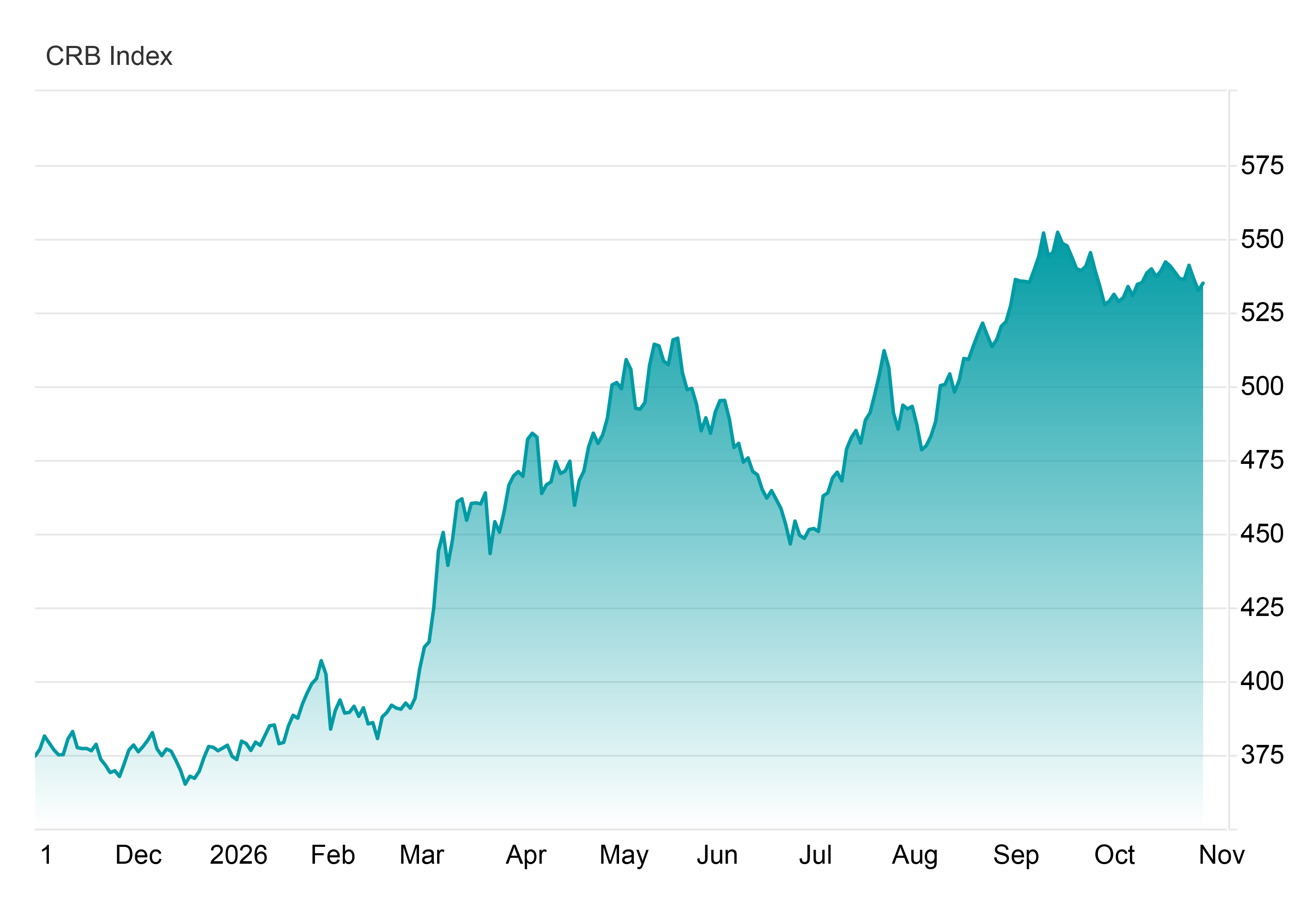
Global commodity markets reinforce the continued pressure on food prices. The CRB Commodity Index2 reached approximately 536 points in October 2026, an increase of 43% compared to the same period last year, following a record high of 552 points in September.
At Wrist, we closely monitor commodity price developments to understand their impact on our product categories. This insight helps us manage price fluctuations and provide customers with greater transparency and predictability in their provision costs.
Growing demand for fixed-rate provision agreements
With food prices fluctuating and supply chains under pressure, more shipowners and ship managers are looking for fixed-rate provision agreements. We see three main reasons behind this development:
- Greater budget predictability
Fixed-rate provision agreements establish agreed prices, including price indexation for a defined period, reducing exposure to short-term food price fluctuations. This allows shipowners and ship managers to plan provision budgets with greater confidence, even when market conditions remain uncertain. - Lower administrative costs and more efficient purchasing
Standardized assortments, agreed pricing, and integrated digital ordering processes simplify procurement across the global Wrist network. By reducing repetitive price negotiations, order administration, and invoice handling, customers save time and reduce transaction-related costs. - More time to focus on crew satisfaction and food quality
Long-term agreements allow customers and Wrist to focus more on shared priorities: Spend less time on administrative matters and more time improving food quality, crew satisfaction, and efficient onboard catering.

Food price developments across key categories
According to the FAO Food Price Index, October 20263, recent developments in major food categories illustrate how weather patterns, geopolitical tensions, and changing demand continue to influence global food prices, underlining the challenges of managing provision budgets.
- Cereals: Global wheat prices increased by 6.3% between August and October 2026, influenced by logistical constraints in the Black Sea region and dry weather in parts of North America. Maize prices also rose, supported by tighter export availability and higher transport costs.
- Vegetable oils: Prices increased by 18.3% year-on-year, driven mainly by strong palm oil demand and dry weather in Southeast Asia. Soy oil prices remained elevated, supported by demand from the biofuel sector.
- Meat: Prices eased slightly from September to October 2026, primarily due to increased poultry and pig meat supplies and weaker demand in key markets. This illustrates how individual food categories may develop differently despite broader inflationary pressures.
- Dairy: Milk powder prices increased year-on-year due to stronger Asian import demand and limited availability, while cheese and butter prices declined slightly due to softer demand.
- Sugar: Prices increased by 6.1% from August 2026 and 14.7% year-on-year, reflecting concerns about global supply following adverse weather and lower production expectations in several major producing countries.
Turning market uncertainty into cost predictability
While global food prices will continue to fluctuate, provision budgets do not have to follow the same pattern. Through fixed-rate provision agreements, transparent pricing and a globally coordinated supply network, we help shipowners and ship managers reduce cost uncertainty, simplify purchasing, and maintain a consistent focus on food quality and crew satisfaction.
